Mach-X — 2022–2023
Celebrating 9 months of dedicated efforts, Peryton Space proudly claimed the top spot in the Mach 23 1.5 km category. Our team executed a launch and recovery of our rocket, alongside the successful deployment and retrieval of our CanSat. The journey was nothing short of incredible, especially as we had the privilege of connecting with fellow student rocketry teams across the UK. Special appreciation goes out to GU Rocketry — despite our technical rivalry, your camaraderie added an extra layer of greatness to the competition. We’re already looking forward to the next year, hoping to meet and collaborate with all the fantastic teams once again.
Awards: 1st place — Mach 23 1.5 km category
- Launch and recovery of the Mach-23 rocket
- Successful CanSat deployment and retrieval
- Strong links with other UK student rocketry teams
Rocket
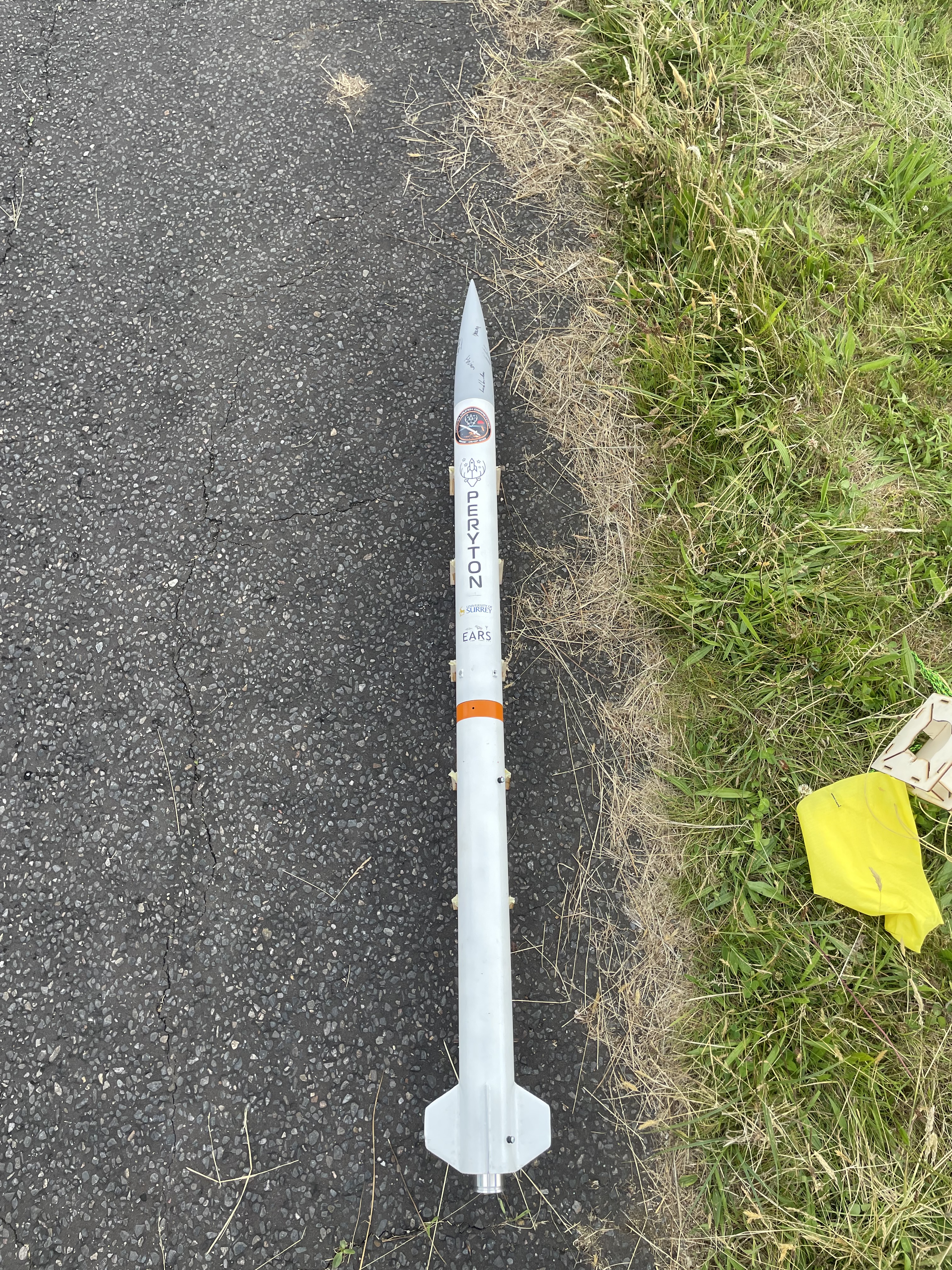
Launch vehicle aimed at an apogee close to 1500 m, demonstrating space-based solar power transmission with onboard solar panels.
CanSat
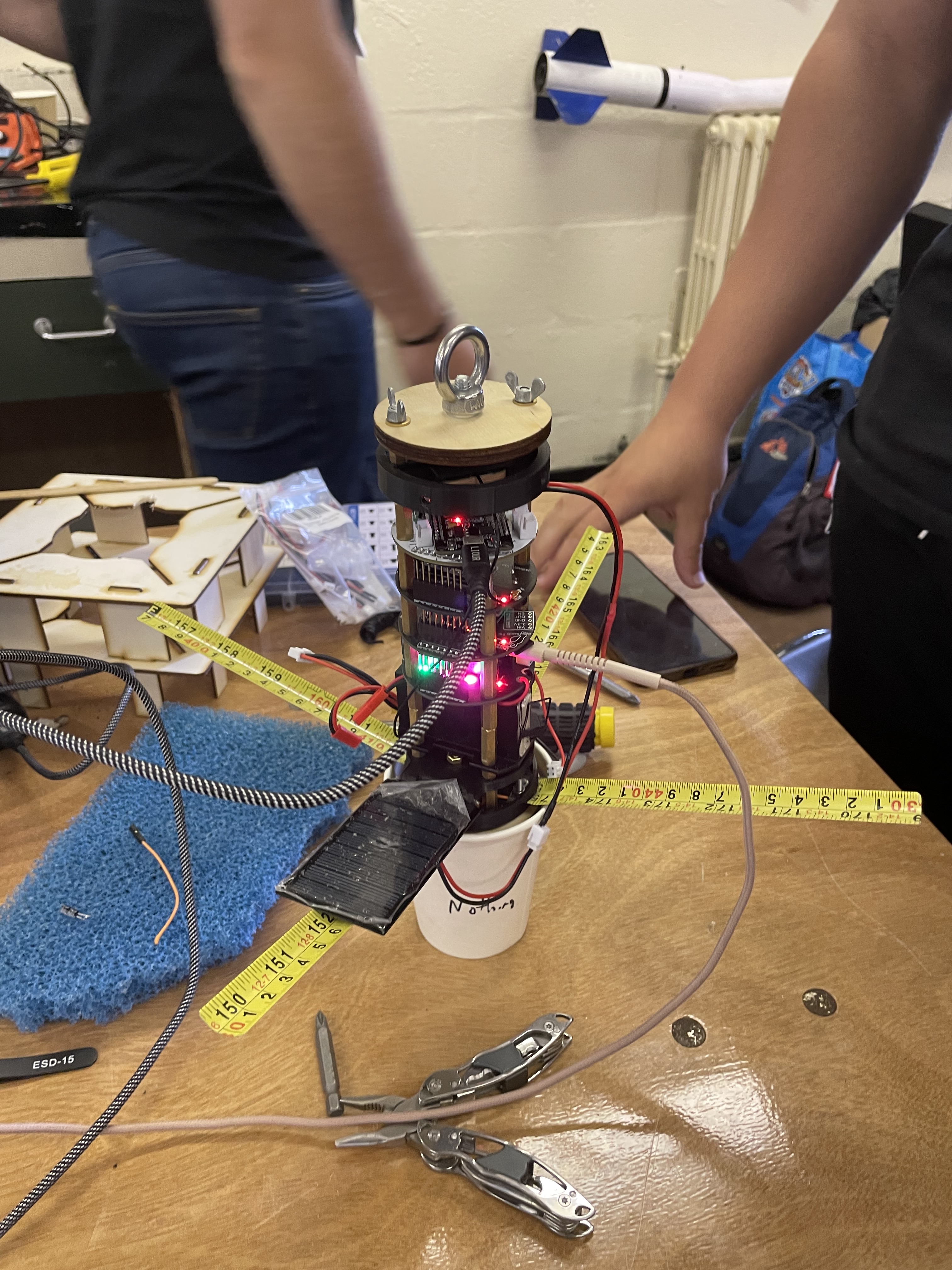
The CanSat collected flight data and simulated harnessing energy from space with a solar-powered radio circuit transmitting live telemetry to the ground station. Onboard: pressure and temperature sensors for altitude, IMU and GPS for tracking, and deployable tape-measure antennas for the radio.
Two computers: a Teensy 4.0 for sensor data and storage, and an ESP32 for radio transmit. Dual pressure sensors for redundancy with four LM75 temperature sensors per PCB layer; MPU-6500 IMU; Neo-6M GPS. The ESP32 ran from a LiPo charging circuit powered by a side-mounted solar panel.